
El Niño Summer: Is Your Waikato Garden Ready for What's Coming?
With one of the strongest El Niño events on record developing, Waikato gardens could be facing a particularly challenging summer. Here's what the latest weather outlook means for your garden, the warning signs to watch for, and why preparing now could make all the difference.
Summer is just around the corner, and while most of us are looking forward to longer days and more time outdoors, the weather forecast is giving gardeners good reason to pay attention.
According to Earth Sciences New Zealand (formerly NIWA), a very strong El Niño event is now firmly established in the Pacific, with the potential to become one of the strongest ever recorded. For the Waikato, the outlook points towards warmer-than-average temperatures, reduced rainfall and more frequent dry spells over the coming months.
For our gardens, that's a combination worth taking seriously.
Plants that have thrived through spring can quickly struggle when temperatures climb, soils dry out and moisture disappears faster than it can be replaced. Even established gardens aren't necessarily immune, particularly when prolonged dry conditions are combined with strong winds.
The good news is that there is still time to prepare. And when it comes to protecting your garden through a difficult summer, a little forward planning can save a lot of heartache later.

What is El Niño, and what does it mean for the Waikato?
El Niño is a naturally occurring climate pattern that develops when ocean temperatures in the central and eastern tropical Pacific become warmer than usual. Although it originates thousands of kilometres away, it influences wind, rainfall and temperature patterns here in New Zealand.
During an El Niño summer, northern and eastern parts of the country often experience drier conditions, while western and southern regions can receive more rain.
The latest forecast for November 2026 through January 2027 suggests that Waikato has:
- A 50% chance of above-average temperatures
- A 45% chance of below-normal rainfall
- A 45% chance of below-normal soil moisture
Those percentages might not sound particularly dramatic, but they represent the most likely outcomes in each category. More importantly, forecasters are expecting reduced rainfall and more frequent dry spells to dominate the season.
And while El Niño doesn't guarantee drought, it certainly increases the need to be prepared.
For gardeners, it's not just the lack of rain that's concerning. Higher temperatures, drying winds and increased evaporation can place plants under considerable stress, particularly if soil moisture is already low heading into summer.
Your garden may be showing signs of stress before you realise it
One of the biggest mistakes gardeners make during hot, dry weather is waiting until plants are visibly struggling before taking action.
By the time leaves are turning brown or dropping off, a plant may already have been under stress for some time.
Learning to recognise the early warning signs can make a significant difference.

Wilting or drooping leaves
This is often the first noticeable sign that a plant is struggling to maintain moisture. Some plants naturally wilt during the hottest part of the day and recover overnight. However, if leaves are still drooping the following morning, it's a stronger indication that something isn't right.
Brown or crispy leaf edges
When plants lose moisture faster than their roots can replace it, leaf edges can begin to dry out and turn brown. This is particularly common on plants exposed to hot afternoon sun or drying winds.
Yellowing leaves or premature leaf drop
Plants under prolonged stress may shed leaves to reduce the amount of moisture they lose. Although yellowing can have several causes, including overwatering or nutrient deficiencies, it can also be a warning sign of drought stress.
Slower growth and fewer flowers
A plant struggling for water will often prioritise survival over producing new growth, flowers or fruit. If your garden seems to have stopped growing despite the warmer weather, insufficient moisture could be contributing.
Dry, hard or cracked soil
Don't rely on the soil surface alone. Check several centimetres below the surface, where the roots are growing. Soil that is consistently dry through the root zone needs attention, particularly around younger plants.
It's also worth remembering that not every struggling plant needs more water. Poor drainage, root damage and disease can produce similar symptoms, so checking the soil before reaching for the hose is important.
Five ways to prepare your garden for a hot, dry summer
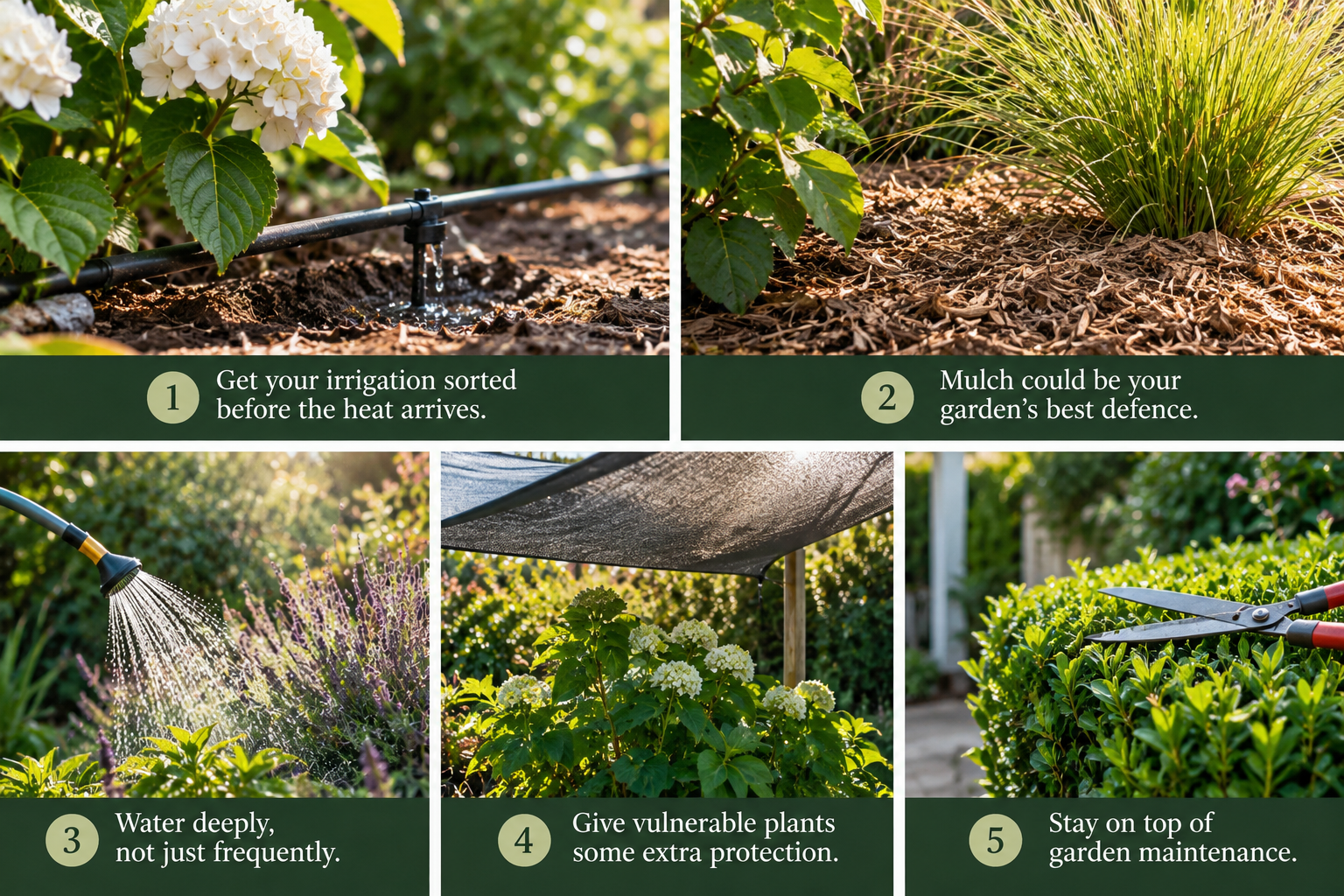
1. Get your irrigation sorted before the heat arrives
If there's one thing worth getting right ahead of a potentially dry summer, it's watering.
Standing outside with a hose every evening might seem manageable now, but keeping an established garden adequately watered through weeks of hot weather can quickly become a time-consuming job.
A properly planned irrigation system takes much of the guesswork out of watering, delivering moisture where it's needed and helping avoid the waste associated with poorly directed sprinklers.
Drip irrigation is particularly effective in garden beds because it delivers water directly into the soil around plant roots, rather than spraying foliage or surrounding areas.
If you already have irrigation installed, now is the time to check it. Blocked emitters, leaking fittings, incorrect timer settings and poorly positioned sprinklers can all leave sections of your garden without enough water.
Remember that watering restrictions may be introduced during extended dry periods, so it's important to follow local council requirements and use water efficiently.
2. Mulch could be your garden's best defence
Mulching is one of the simplest and most effective ways to help your garden cope with dry conditions.
A good layer of organic mulch helps reduce evaporation from the soil, moderates soil temperatures and suppresses weeds that would otherwise compete with your plants for precious moisture.
For most established garden beds, aim for approximately 5–7 cm of suitable mulch, keeping it clear of plant stems and tree trunks to avoid trapping moisture against them.
Bark, arborist wood chips and other organic mulches are all worth considering, depending on the garden and the plants growing in it.
If your garden beds are looking a little bare, replenishing the mulch now is a worthwhile investment before the soil begins to dry out.
3. Water deeply, not just frequently
A quick sprinkle over the garden might make the soil look damp, but it often does very little for the roots beneath.
For established plants, slower, deeper watering that reaches the root zone is generally more beneficial than frequent light watering. It encourages roots to access moisture further down in the soil and reduces the risk of plants becoming dependent on moisture near the surface.
Early morning is usually the best time to water, when temperatures are cooler and evaporation is lower.
However, there's no single watering schedule that suits every garden. Soil type, plant species, exposure and how established the plants are will all influence how much water is required.
Newly planted trees, shrubs and hedges deserve particular attention. Their root systems are still developing, which makes them far more vulnerable to extended dry periods.
4. Give vulnerable plants some extra protection
Not all plants cope equally well with summer heat.
Hydrangeas, ferns and other moisture-loving plants can struggle in exposed positions, while newly planted trees and shrubs may need additional support through their first few summers.
Temporary shade cloth can help protect vulnerable plants during particularly hot spells, especially those exposed to intense afternoon sun.
It's also worth checking exposed gardens for wind damage. El Niño conditions can bring stronger and more persistent westerly winds, which increase moisture loss from both plants and soil.
Where possible, protecting vulnerable plants from drying winds can make a noticeable difference.
5. Stay on top of garden maintenance
A well-maintained garden is generally better equipped to handle difficult weather conditions.
Weeds compete for water, overcrowded plants can struggle for resources, and neglected irrigation systems can fail just when they're needed most.
Regular garden maintenance provides an opportunity to identify problems early, check soil conditions and adjust care as the weather changes.
However, some jobs need a little extra consideration during hot weather. Heavy pruning can expose previously shaded growth to intense sunlight, while fertilising severely drought-stressed plants can place additional pressure on an already struggling root system.
During extended dry periods, the priority should be maintaining plant health rather than encouraging excessive new growth.
Don't forget your trees and established hedges
It's easy to assume that large, established plants can look after themselves, but prolonged dry weather can take its toll on mature trees and hedges too.
Established trees generally have extensive root systems, but they can still suffer when soil moisture remains low for extended periods. Early signs may include thinning foliage, smaller leaves, premature leaf drop or dieback in the outer branches.
Large hedges can also lose significant amounts of moisture during hot, windy weather, particularly when they're regularly trimmed and have dense foliage.
Pay special attention to trees and hedges planted within the past two or three years. They may look established above ground while their root systems are still developing.
And don't assume a short burst of rain has solved the problem. After a prolonged dry spell, rainfall may not penetrate deeply enough to replenish moisture around the roots.
The cost of waiting until your garden is struggling
Gardens are an investment, not just financially, but in the time and care it takes to establish them.
Replacing a mature tree, an established hedge or an entire garden bed can be considerably more expensive than taking preventative measures before summer arrives.
And while some drought-stressed plants will recover once conditions improve, others may suffer permanent damage.
With the 2026/27 El Niño already well established, this isn't a summer to leave things to chance.
Now is the time to check your irrigation, replenish mulch, identify vulnerable plants and make sure your garden is in the best possible condition to cope with whatever the coming months bring.
Let Groundcover help you get summer-ready
At Groundcover Landscaping, we know how much work goes into creating and maintaining a beautiful garden, and how quickly difficult weather conditions can undo that hard work.
Our experienced Garden Care team can help with seasonal garden maintenance, mulching, plant health checks and identifying areas that may need extra attention before the summer heat sets in.
Whether your garden needs a one-off tidy-up or ongoing professional care, getting ahead of the weather now is a far better option than trying to rescue struggling plants later.
With a potentially challenging summer ahead, don't wait for the first signs of damage. Get in touch with Groundcover Landscaping and let's give your garden the best possible chance to thrive this summer and more.